


Interface Program
MEET OUR CBI TRAINEES
The University of Massachusetts Amherst Chemistry-Biology Interface (CBI) Program is dedicated to fostering a collaborative and innovative environment for aspiring scientists. Our program supports both resident and non-resident students with funding for their research.
CBI Funded Trainees are the cornerstone of our extensive alumni network. For more than 30 years, we've built a community of accomplished scientists, writers, and other professionals who got their start right here at UMass Amherst, as part of the CBI Program.
NIH Funded Trainee's
The CBI Program offers a couple funding opportunities, one of which is our NIH funded trainees. These trainees are granted an NIH Stipend which covers the majority of their funding for the year or 2 years that they are selected for funding.
This funding is stipulated for Trainees in their second and/or third years of their PhD studies.
Our NIH Trainee's also have access to travel funding support.
NIH Funded Traineeships are only available to US Citizens.


UMass Funded Trainee's
The CBI Program offers a couple funding opportunities, one of which is our UMass funded trainees.
These trainees are granted an UMass Stipend which covers their Spring stipend for the year or 2 years that they are selected for funding.
This funding is stipulated for Trainees in their second and/or third years of their PhD studies.
Our UMass Trainee's also have access to travel funding support.
UMass Funded Traineeships are available to Non-Citizens as well as US Citizens.
Meet the CBI Trainees

NIH Trainee
Benjamin Adams
My focus is on developing improved CRISPR-based genome
imaging tools to study genome architecture dynamics in live cells.


NIH Trainee
Kate Gregory
I study an ATP-binding cassette transporter in Mycobacterium smegmatis.

NIH Trainee
Em Ambrosius
My work revolves around developing methods to speed up the study of enzymatic polymer degradation. These high-throughput methods will allow for a greater understanding of the fundamental process of polymer degradation and an increased ability to optimize this system for industrial use.

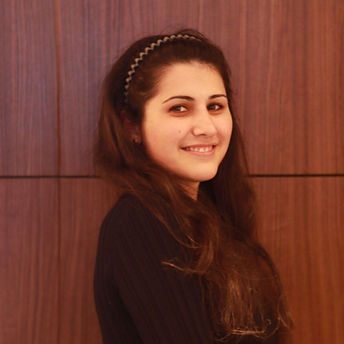
NIH Trainee
Donna Ter-Mkrtchyan
My research develops in vivo models to examine how disease-specific tau structures and local brain environments interact to drive selective tau aggregation and spread across specific brain regions and cell types in tauopathies, including Alzheimer’s disease.

NIH Trainee
Isabella Rosetti
I use native mass spectrometry to study how intrinsically disordered protein Tau shifts its conformational ensemble during the early stages of aggregation.

NIH Trainee
Stephen Kotfila
My research focuses on the manipulation of vesicle trafficking in human macrophages by a mycobacterial outer membrane lipid, trehalose 6,6’-dimycolate (TDM).

NIH Trainee
Grace Jackson
Exploring the role of ornithine decarboxylation degradation by the ClpXP protease in
Caulobacter crescentus.

NIH Trainee
Harun Cerkezi
I study how protein kinases and immune signaling pathways modulate changes in the integrity of the blood-brain barrier during cerebral malaria, with the goal of identifying therapeutic targets to improve cerebral malaria treatment.

NIH Trainee
Patrick Murphy
Investigating the impact of peroxisomal dysfunction on lipid homeostasis in Arabidopsis thaliana

UMass Trainee
Madhumita Pan
I work on developing biologics for cell membrane reprogramming via extracellular targeted protein degradation and exogenous protein delivery on the cell surface.

UMass Trainee
Bakthavachalam Kannadasan
Developing microfluidic based fixed-target devices for addressing the sample delivery
challenges while performing time-resolved serial crystallography experiments.

UMass Trainee
Mohamed Elanany
I develop biological and chemical degraders to selectively eliminate cryptochrome proteins post-translationally, enabling functional deconvolution of their role in circadian rhythm regulation independent of genetic knockout approaches.

UMass Trainee
Yuanhang (Caroline) Luo
My research focuses on identifying and characterizing efflux pumps responsible for drug resistance in mycobacteria.

UMass Trainee
Ngoc Le
Mechanical forces govern a vast majority of cellular activities, from migration, adhesion, differentiation, and proliferation to cancer progression. Mechanobiology seeks to elucidate not only how cells interact with one another and with their surrounding environment, but also how mechanical cues are transduced into biochemical signaling and downstream functional responses. My current project focuses on using DNA-based constructs to enable a robust, comprehensive, multiplexed, and high-throughput strategy for capturing transient mechanical forces and uncovering their dynamic regulation in living systems.

UMass Trainee
Harini Chandrababu
My research focuses on developing smart, pH-responsive nanomaterials that selectively kill bacterial biofilms without harming healthy human cells.

UMass Trainee
Yimeng Sun
My research aims to harness synthetic ribonucleoprotein complexes, which comprise engineered RNAs
and RNA-binding effector proteins, to achieve targeted protein degradation in mammalian cells, thereby
broadening therapeutic opportunities for diseases driven by pathogenic proteins.